I’ve been watching Pole to Pole, a National Geographic series hosted by Will Smith. His objective intrigued me: “to travel across all seven continents, to explore the world’s most extreme environments, seeking answers to life’s important questions by stepping into the unknown.”
Episode Four finds him trekking to the Himalayan nation of Bhutan. He was there to explore the secret of happiness, famously enshrined by the Bhutanese in their concept of Gross National Happiness. You got that right. GNH, not GNP.
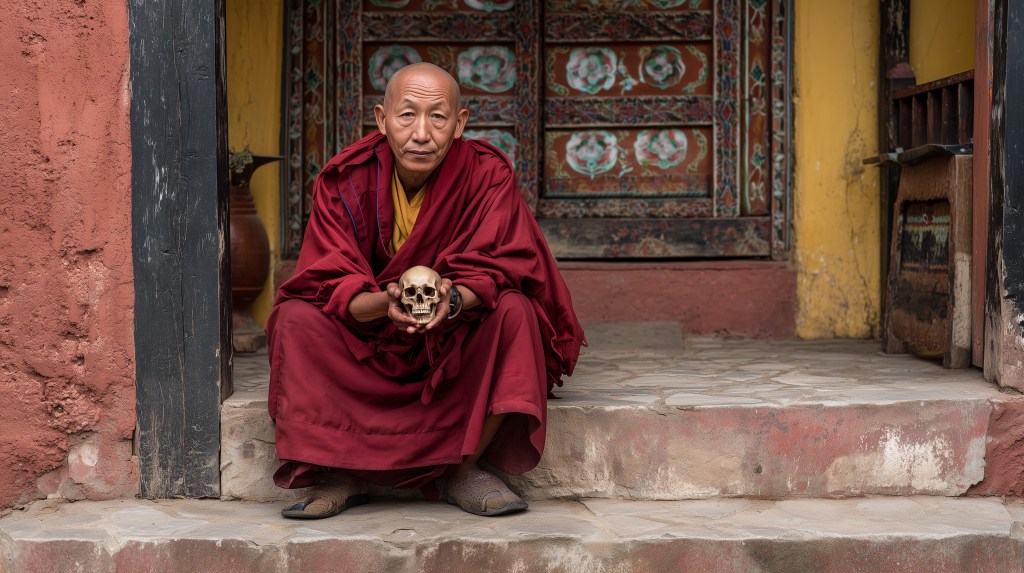
In one scene, Smith sits with a Buddhist monk who offers a disarmingly direct message. If we contemplate death regularly, not as a morbid obsession but as a truth we refuse to look away from, it sharpens our awareness of being alive. It makes the ordinary radiant. It turns the fleeting resource of time into something sacred.
We’ve always known this, haven’t we? It’s one of humanity’s oldest lessons, hiding in plain sight. The fact that we will die is not a curse. It is the condition that gives life its urgency and texture.
And yet, think of how much effort we’ve poured into pretending otherwise.
The pharaohs of ancient Egypt didn’t just accept mortality; they aimed to defeat it. They constructed pyramids, had their bodies mummified, and buried themselves with treasures, all to ensure that their power continued in the afterlife.
Chinese Emperor Qin’s Terracotta Army has stood for two millennia in silent formation beneath the earth. Thousands of life-sized soldiers created to guard him in the next world. Imagine the slave labor, the resources, and the sheer will it took to bring that vision into being. All of it to satisfy an “afterlife ego.”
History is rife with other examples. Roman Emperors deified themselves, casting their likenesses in marble and bronze as a desperate attempt at permanence. Medieval alchemists searched for the elixir of life, convinced that somewhere in the crucible of chemistry lay a secret that could outwit time. Ponce de Leon searched unsuccessfully for the Fountain of Youth.
Fast forward to our modern world. The demand for cosmetic surgery continues to rise, promising a veneer that masks the inevitable. Companies offer cryogenic freezing, allowing us to gamble on a future where science might reverse the irreversible. Even our language reflects our resistance to embrace death’s reality. We “pass away.” We are “no longer with us.” “Grandma is in heaven with Jesus.”
I get it. It’s profoundly unsettling to think that everything we are—our memories, our relationships, our inner worlds—will simply stop. It’s not just our fear of pain or the unknown. It’s the erasure that unnerves us.
As I watched Smith speak to that Bhutanese monk, it was clear to me. The problem isn’t death itself. It’s the energy we spend trying to outrun it.
So, even though it’s obvious, let’s say it again. Each of us will die. Not someday in the abstract, but actually. No exception. No workaround.
The art is to make this a portal to liberation. Once we stop buffering ourselves from death, it clears the clutter and exposes what matters. Petty grievances lose their grip. Delayed dreams start to feel urgent. The people we love become more vivid, more necessary, and more present in our lives.
Contemplating death doesn’t shrink life. It enlarges it. It makes our morning coffee taste a little better. It makes the sunlight on a wall feel like a small miracle. It reminds us that the conversation we’ve been putting off might be worth having today. It prompts us to feel grateful, knowing how quickly everything can disappear.
Let the thought of your own finitude sit beside you today. Not as a threat, but as a companion. Let it moisten your appetite for the ordinary yet EXTRAORDINARY fact that you are alive RIGHT NOW.
This is not a morbid discipline. It’s a beginning.
 Second Shore Publishing